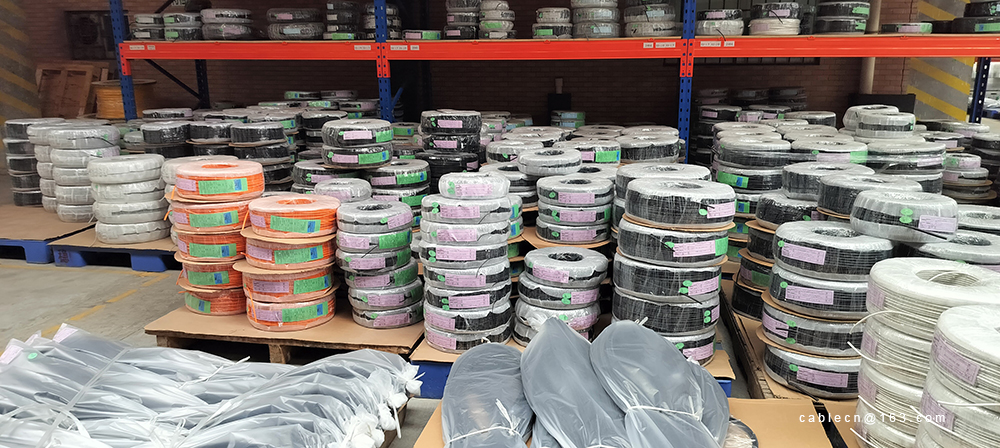
Cable Factory, UL Cable Factory
UL Cable Products
The manufacturing facility operates in full compliance with internationally recognized standards and certifications, ensuring that all products meet stringent requirements for safety, reliability, and performance. This commitment to quality spans a diverse range of applications, from everyday household electrical wiring and consumer electronics to demanding industrial machinery, automation systems, and high-speed telecommunications infrastructure. By adhering to these global protocols, the cable products that manufactured by the factory not only perform consistently under specified conditions but also prioritize end-user safety and long-term operational durability across all sectors.
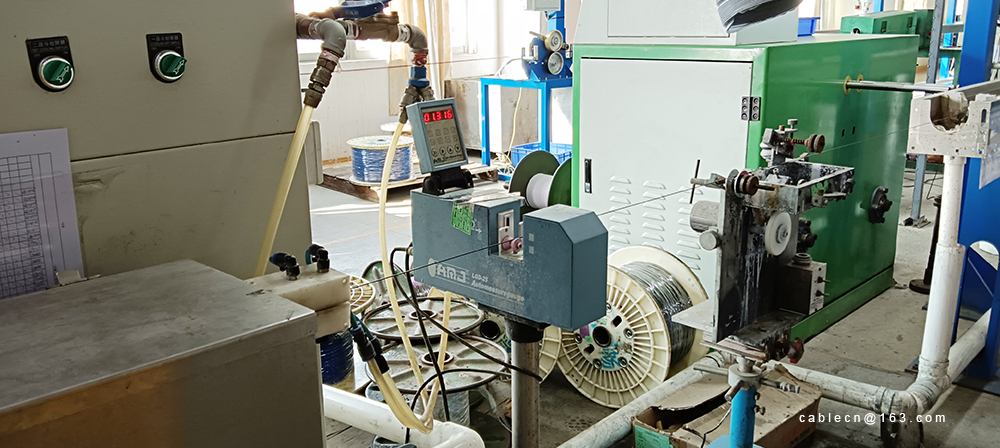
Insulation Extrusion
The individual conductor strands are fed into the extrusion machine, where a precise and controlled insulation process takes place. Within the extruder, specially formulated compound is heated to its melting point, becoming a homogeneous, viscous fluid. This molten insulation material is then uniformly and continuously applied around the moving conductor through a specialized die, forming a concentric, consistent layer of electrical insulation.
A critical aspect of this step is the simultaneous application of color-coding. This process ensures not only excellent dielectric properties and mechanical protection but also achieves the various color-coded insulated wires essential for circuit identification, safety, and ease of installation in subsequent wiring harness assembly or electrical system construction. The extruded wire is then cooled and solidified, completing this foundational stage of wire manufacturing.
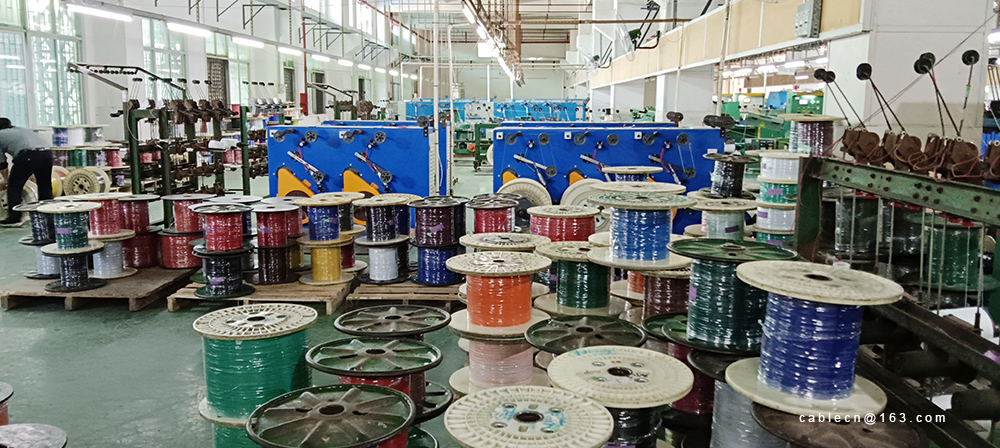
Insulated Wires Assembly
Insulated conductor wires are bundled together through a process of twisting or cabling to form a structured cable core. To achieve and maintain optimal geometric roundness, which enhances both mechanical stability and electrical performance, fillers made of non-conductive materials (such as PP yarn or cotton) are often incorporated into the core where necessary. For applications requiring protection against electromagnetic interference (EMI) or radio frequency interference (RFI), the twisted assembly will be wrapped with a conductive foil shield (typically aluminum foil), providing 100% longitudinal coverage. Alternatively, or in addition, a braided shield composed of interwoven tinned copper strands is applied, offering superior flexibility and mechanical strength. A bare or tinned copper drain wire is frequently placed in continuous contact with the foil shield to facilitate reliable grounding and termination of the shield, thereby ensuring effective noise dissipation and system integrity. This configuration is fundamental in the design of various signal and control cables used in industrial, data, and audio/visual applications.
Jacket Extrusion
Similar to insulation, an extruder applies a tough outer jacket to protect against mechanical damage, moisture, chemicals, and environmental factors. Inside the extruder, raw material in pellet form, such as PVC, Polyethylene PE, or Cross-linked Polyethylene XLPE, is gravity-fed into a rotating screw within a heated barrel. The screw conveys, compresses, melts, and homogenizes the material into a viscous, molten state.
The molten polymer is then forced through a specially designed cross-head die. The core wire passes through the center of this die, and the molten plastic is uniformly applied around it in a concentric, tubular shape, forming the jacket. The critical parameters of melt temperature, extrusion pressure, and line speed are meticulously controlled to ensure consistent wall thickness and adhesion.
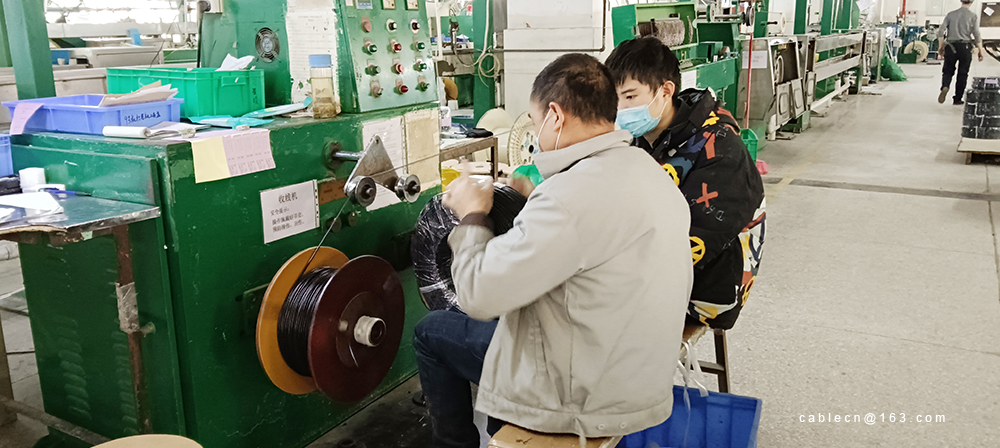
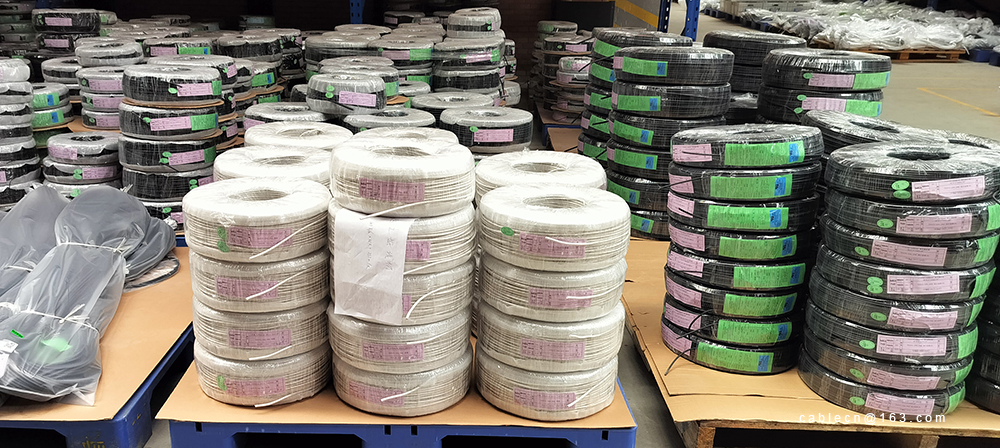
Packaging with UL tags
Cables are wound onto durable reels or neatly coiled into compact bundles, ensuring protection against damage and tangling. In accordance with standardized industry specifications, each unit is then securely affixed with UL safety tags, which provide essential information regarding compliance, ratings, and traceability. This end-of-line process guarantees that the cables arrive at their destination in perfect condition while maintaining full regulatory and quality assurance integrity.